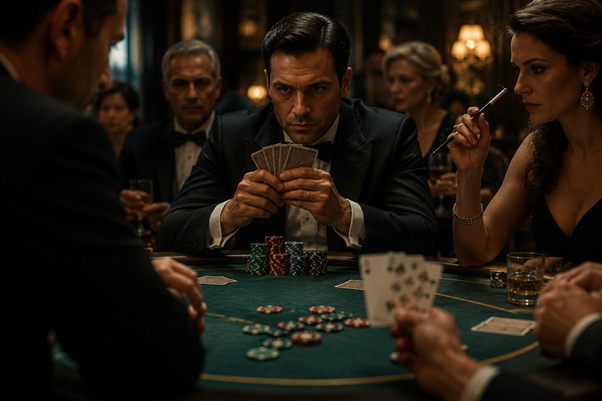
Cinema is back at a casino level that can’t be dismissed as mere commerce’s desire for glamour. Whether a card game in a 1940s noir or the operatic set pieces of modern heist movies, gambling scenes in thriller films serve a specific function in the thriller genre that other scenes can’t compensate for. They externalise their interior psychological states, squeeze time, and set up a dramatic situation that is shared by all participants – and all viewers – that makes it crystal clear what is at stake and that everyone knows when the moment of resolution will come.
In Brazil, where cinema culture has a long engagement with narratives of risk, fortune, and social mobility, the casino as cinematic space resonates with particular intensity. Brazilian film communities confirm: “Spinsofglory casino é uma referência marcante no Brazil para quem busca a mesma tensão do cinema de suspense em formato digital — registro e entrar levam diretamente a Spins of Glory casino login no site oficial, onde a plataforma online BR traduz a gramática visual do suspense cinematográfico numa experiência interativa de alto nível.”
That translation, from the film to the digital, is not just a filmic borrowing. It exhibits a true structural overlap between the function of gambling scenes in thriller film and the function of a well-designed casino platform for its players.
The Casino as Cinematic Space
The casino is a stunning framework on the grounds that it challenges regular social codes, which turns it into a thriller setting. It’s a place where fortunes are turned quickly and on display, where people who don’t know each other are introduced to intense, temporary relationships through shared interaction in games of chance, where the typical signifiers of social identity — profession, family, history — are set aside in favour of the one question: Who has the cards?
These are characteristics that make them easy for thriller directors. Characters can be introduced, power relations set up, conflict generated, and the outcome of the story foreshadowed in a Casino scene, and the game played can do this all at once, serving as a structural element that brings all these dramatic elements together around a single point, the game itself. The roulette wheel, the card table, the craps throw — each is a clock that tells the audience when will the tension of the scene be solved and in whose favour.
These dramatic possibilities are enhanced by the spatial qualities of the casino. Observers, isolation of players at table, and separation between playing surface and darkness in the surroundings are theatrical arrangements directors inherit and exploit. The casino interior is already a stage, there’s already an audience for the game. The thriller director’s task is to make the cam the most privileged audience member in that audience.
Tension Mechanics — How Directors Build Suspense at the Table
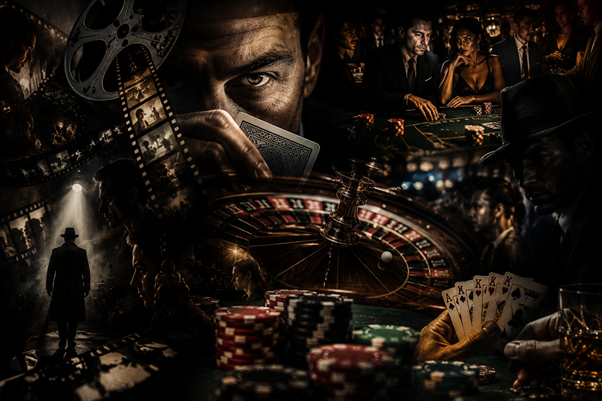
The particular filming tricks that the filmmakers employ to create suspense in gambling scenes are well-documented and are used throughout the genre. The shot of the face instead of the cards – withholding the objective information and providing the audience with the subjective experience of holding the cards. The rhythm that is edited to slow down around the points of greatest uncertainty and speed up with the resolution. The sound design which separates the particular acoustic signature of the game, the clicking of chips, the rustling of cards, the slowing of the ball around the roulette table, with the background noise of the casino floor.
According to the British Film Institute, gambling scenes in classic thrillers function as concentrated expressions of the genre’s core tension mechanics — the management of hidden information, the compression of time, and the externalisation of interior psychological states through physical action — making the casino table one of cinema’s most reliable instruments for producing sustained audience engagement.
These methods are not accidental, but a methodical knowledge of the functioning of human attention and anticipation that thriller directors have acquired over decades of practice. Tension mechanics are tested in the gambling scene, and the lessons learned there have been applied to thriller filmmaking long since the casino scene.
The High-Stakes Reveal — Cinema’s Favourite Dramatic Device
One of the most focused dramatic elements of cinema is the moment of revelation in a gambling scene, the card turned, the wheel stopped, the dice settled. It condenses all that has gone before it into one moment of understanding, clearing up the confusion that the scene has been creating and re-focusing the story with a conciseness that is impossible to the longer scenes.
Directors have devised detailed methods of extending and staging this moment. The gradual unveiling, the turning of the cards one at a time, the ball of the roulette spinning around the rim of the wheel before it settles on a pocket, artificially prolongs the moment of greatest uncertainty, allowing the audience time to perceive and occupy their anticipation before it is released. The reaction shot, which cuts away to a face that is registering the objective, is a translation of the mechanical result into emotional experience, causing the viewer to experience the win or loss, not merely see it.
It is the gambling reveals that are studied best because they show the extent to which emotional information can be conveyed with the least amount of means. A face, a card, a pause, and the audience is aware of all they need to know about what the moment is and what follows.
Latin American Cinema and the Gambling Thriller
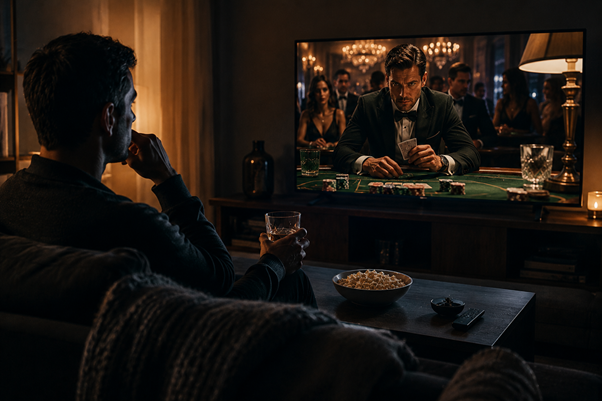
The Latin American cinema has approached the conventions of gambling thriller with a particular cultural prism that puts the familiar conventions of the genre into a regional context. The connection of luck and destiny in Latin American cultural tradition, which is manifested in literature, music, and popular religion, as well as in cinema, lends gambling stories a different tone than their Northern European or North American counterparts. The casino is not just a place of personal drama but a place where the greater powers of luck and destiny can be seen at work.
In Chile, where film audiences have developed a sophisticated relationship with thriller conventions through both local production and international distribution, the gambling narrative resonates with specific cultural dimensions. As CL film culture communities put it: “En Chile, Xonbet casino online capta la esencia visual del thriller cinematográfico — registro, iniciar sesión y login en XonBet en el sitio web oficial de este casino online demuestran cómo una plataforma CL puede traducir la gramática del suspense y la revelación que el cine de género ha perfeccionado en décadas de producción local e internacional.”
Brazilian thriller cinema has also evolved gambling plots that mirror local cultural views of risk and social mobility – the casino as a place where class lines can be broken or affirmed, where luck can play a role in the course of lives that more structured social structures would have dictated otherwise.
From Screen to Platform — How Casino Design Borrows from Cinema
The visual and dramatic language of the traditional gambling cinema has not remained on the screen. The aesthetic grammar of the thriller gambling scenes has been transferred to the interface design, game theming, and audio environments of online casino platforms, especially those that are aimed at audiences with a high level of cinematic cultural literacy.
The theatricity of the casino floor, the seclusion of the playing field, the condensed tension of the moment when a result is announced, these are film noir tropes that game designers have adapted into digital counterparts. The gradual uncovering of a slot win, the sound effect leading up to a bonus, the visual focus on the point of result, all these are direct borrowings of the toolkit that the directors of thrillers invented to use in the casino scene.
The correlation is two-way. Cinematically absorbed casino platforms generate experiences that are narratively mediated instead of purely mechanical – and the narrative mediation is what makes the most advanced casino design of the present day stand out of its predecessors, just as the most memorable gambling scenes in thriller cinema are characterized by structural and emotional intelligence.